

Overview:
The Computational Systems Biology Laboratory at USC develops mechanistic models of biological processes and utilizes the models to:
- gain insight into the dynamics and regulation of biological systems
- synthesize and interpret experimental and clinical observations
- provide a quantitative framework to test biological hypotheses
- support the development of novel therapeutics for pathological conditions
We perform experimental studies to obtain quantitative measurements needed to construct computational models that increase our understanding of specific biological processes. We also collaborate closely with experimental and clinical researchers. These fruitful collaborations enable experimental testing of the model predictions.
Current projects:
The main projects in the CSBL are focused on applying computational modeling to study complex networks in living systems. This includes signaling and metabolic networks inside of cells, as well as networks of interactions between heterogeneous populations of cells. Current projects mainly study how the dynamics of these networks in cancer. Because the evolution of these networks involves numerous cell types, molecular species, and pathways, and the dynamics occur on multiple timescales. Therefore, a systems biology approach, including experiment-based computational modeling, is required to understand these complex processes and their interconnectedness in cancer. Models can simulate biological processes under pathological conditions and predict interventions that restore normal physiology. Additionally, the models can identify which tumors will respond favorably to a particular therapy, aiding in the development and optimization of effective therapeutics.

Systems biology approach to understand immune cell activation
NK cell-based immunotherapy. Natural killer (NK) cells are innate immune effector cells that may be engineered for cancer immunotherapy by expression of chimeric antigen receptors (CARs), engineered proteins that direct NK cells to kill cancer cells. We aim to better understand intracellular signaling mediated by NK-CARs to enable efficient design of optimal CARs for multiple myeloma. The goal of this project is to identify effective NK based-CAR designs using systems biology tools.
Modeling the TME. The presence of multiple tumor cell subpopulations, immune cells, and stromal cells in the tumor microenvironment (TME) can give rise to complex interactions that: promote tumor progression, influence the responses to treatment, and contribute to therapeutic resistance. In advanced breast tumors, these interactions particularly contribute to the lack of efficacy of immunotherapies. The main goal of this work is to quantitatively study and model the tumor-immune microenvironment in breast cancer.
NIH NRSA F31 (2015-2018; Co-Sponsor: Finley);
USC CCMC (2020-present);
NIH NCI (2022-present; multi-PI: Finley, Graham)
NIH NCI (2025-present; multi-PI: Finley, Roussos Torres)
Model of metabolic phenotypes in cancer
Quantitative, dynamic models of the metabolic phenotypes observed in cancer can be used to develop therapies that inhibit tumor metabolism. The development of an experiment-based, validated computational model of metabolism in various cancer types will provide a more in-depth understanding of the dynamics of altered tumor metabolism, which drives cancer progression. Our long-term goal is to understand the cellular metabolism of tumors and support the development of novel cancer therapies that inhibit aberrant tumor metabolism.
Rose Hills Research Fellowship and USC Provost's Office (2015-17; PI: Finley);
NIH NCI (2018 - 2024; multi-PI: Finley, Macklin, Mumenthaler)


Model of lymphatic permeability
The lymphatic system plays a crucial role in keeping tissues in the body balanced by filtering and absorbing fluids, monitoring which cells enter a tissue, and transporting dietary fats into the bloodstream. Sometimes, vessels in the lymphatic system can become leaky. Though helpful in certain conditions, when this leakiness continues for too long, it can slow down the flow of lymph fluid, leading to excess fat buildup, tissue scarring, and persistent inflammation, which are common in many chronic diseases. The goal of this project is to develop an integrated computational and experimental engineering-based approach to determine strategies to modulate lymphatic permeability.
NSF CAREER Award (2024-present, multi-PI: Finley, Cifarelli)
Studying pancreatic beta cells:
Integrating imaging and systems biology models This is a collaboration with Professor Scott Fraser at USC. We are combining high-resolution live-cell microscopy and computational modeling to study an important signaling pathway in pancreatic beta cells: prolactin-induced JAK-STAT signal transduction, which plays a role in beta cell proliferation.
Signaling pathways that regulate pancreatic beta cell regeneration This is a collaboration with Professor Senta Georgia from Children's Hospital of Los Angeles. We constructed a predictive mathematical model to investigate the dynamic cell signaling that mediates regeneration of beta cells.

Computational model of pancreatic beta cell metabolism We used mathematical modeling to study metabolic pathways in beta cells. This is part of the Pancreatic Beta Cell (PBC) Consortium. We are collaborating with Professors Nicholas Graham and Scott Fraser, who are collecting experimental data needed to construct the model.
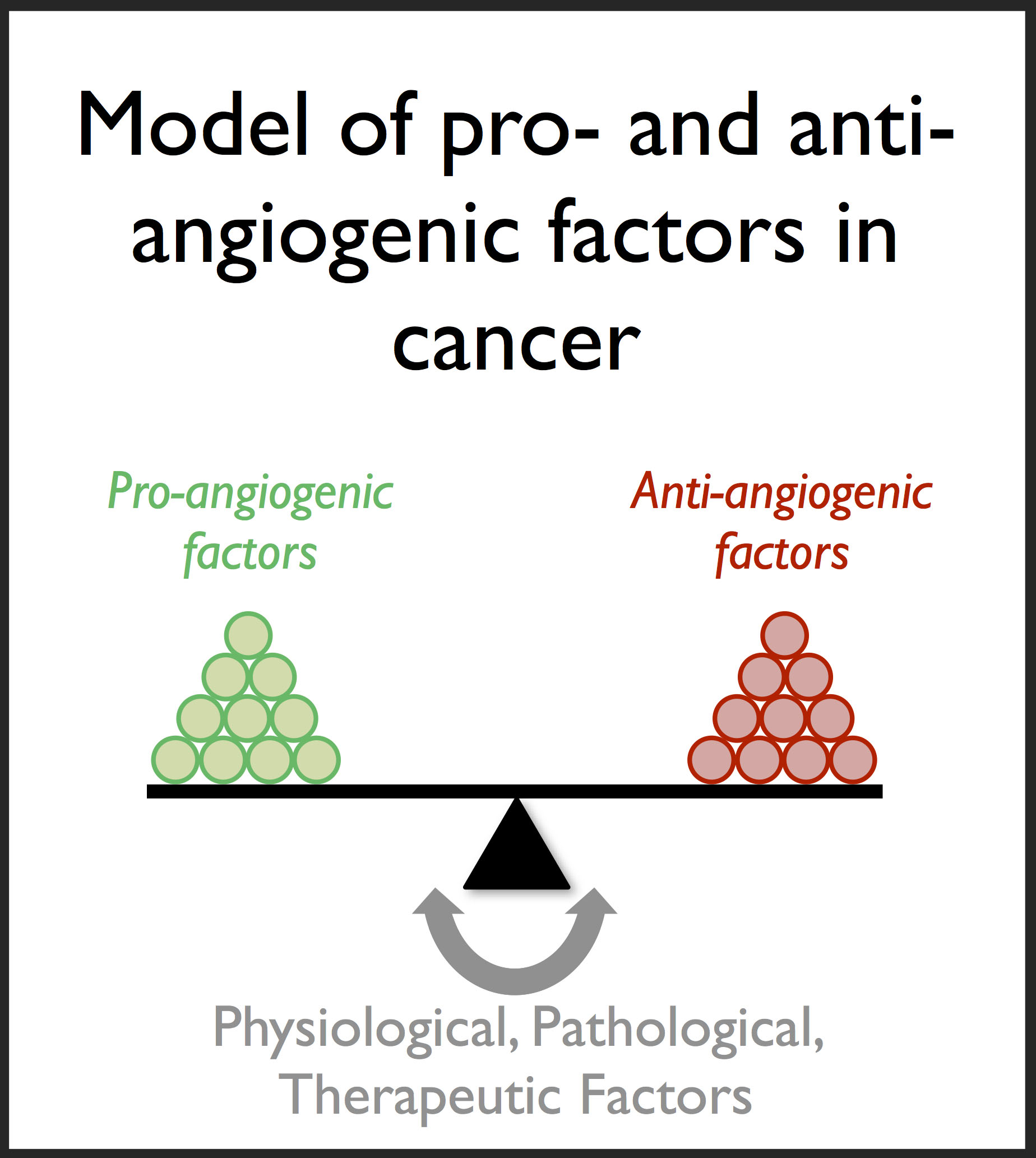
Model of pro- and anti-angiogenic factors
Computational modeling is needed to understand the complexity and interconnected nature of the angiogenesis signaling pathways and predict the effect of anti-angiogenic strategies. A quantitative understanding of the relative levels of angiogenic factors under pathological conditions would aid in the development of therapeutic agents that target these factors. Thus, the long-term goal of this project is to investigate the angiogenic balance in cancer and identify effective therapies that target promoters and inhibitors of angiogenesis.
NSF CAREER Award (2016-22, PI: Finley)
ACS Research Scholar Grant (2017-22, PI: Finley)